.jpg)
Details
Date:
July 15, 2026
Author:
Mender Team
An ITAD service performs the work of securely retiring assets. An ITAD platform gives enterprise teams visibility into that work, including asset status, documentation, recovery, and vendor performance.
This article explains the difference and what to look for in a true ITAD platform.
An ITAD service manages the secure and responsible retirement of technology after it leaves active use.
The provider may handle collection, transportation, inventory auditing, data sanitization, physical destruction, testing, refurbishment, redeployment, resale, recycling, and final reporting. A mature provider may also coordinate multiple sites, manage downstream partners, maintain serialized records, and help recover value from eligible equipment.
An ITAD service supplies the people, facilities, transportation, tools, buyer channels, security processes, and operational controls required to move assets from retirement through final disposition.
Without this execution layer, the organization may have a strong strategy but no reliable way to carry it out.
An ITAD platform is the technology layer used to manage and understand ITAD activity.
It should give stakeholders access to current orders, asset movement, processing status, chain-of-custody records, sanitization documentation, recovery performance, workflow exceptions, environmental outcomes, and final disposition.
The platform does not physically move or process equipment. It makes the work visible, manageable, and easier to evaluate.
A dashboard or document library does not automatically qualify as an ITAD platform. A true platform should meet several core criteria.
Users should be able to see where orders and assets are in the process, including pickup, transportation, receiving, audit, sanitization, processing, recovery, and closeout. The platform should help teams identify delays and unresolved exceptions before the project is complete.
Program-level totals are not enough. Users should be able to move from a dashboard metric to the underlying order, asset, serial number, chain-of-custody record, sanitization result, and final disposition.
Certificates and reports should be tied to the assets and activities they cover. The platform should connect operational records, sanitization evidence, reconciliation results, recovery reporting, and final disposition documentation in one environment.
Enterprise programs often involve several facilities, processors, logistics providers, and downstream partners. A true platform should standardize reporting and provide one view across those participants.
Missing assets, serial-number mismatches, delayed certificates, failed sanitization attempts, and other exceptions should remain visible until resolved. A platform that only displays completed work provides limited operational control.
IT, finance, procurement, compliance, security, sustainability, and leadership teams need different information from the same lifecycle record. The platform should allow each stakeholder to access the information relevant to their responsibilities.
A mature platform should help teams understand what requires action. That may include recovery trends, processing delays, documentation gaps, market timing, disposition outcomes, and program performance across locations.
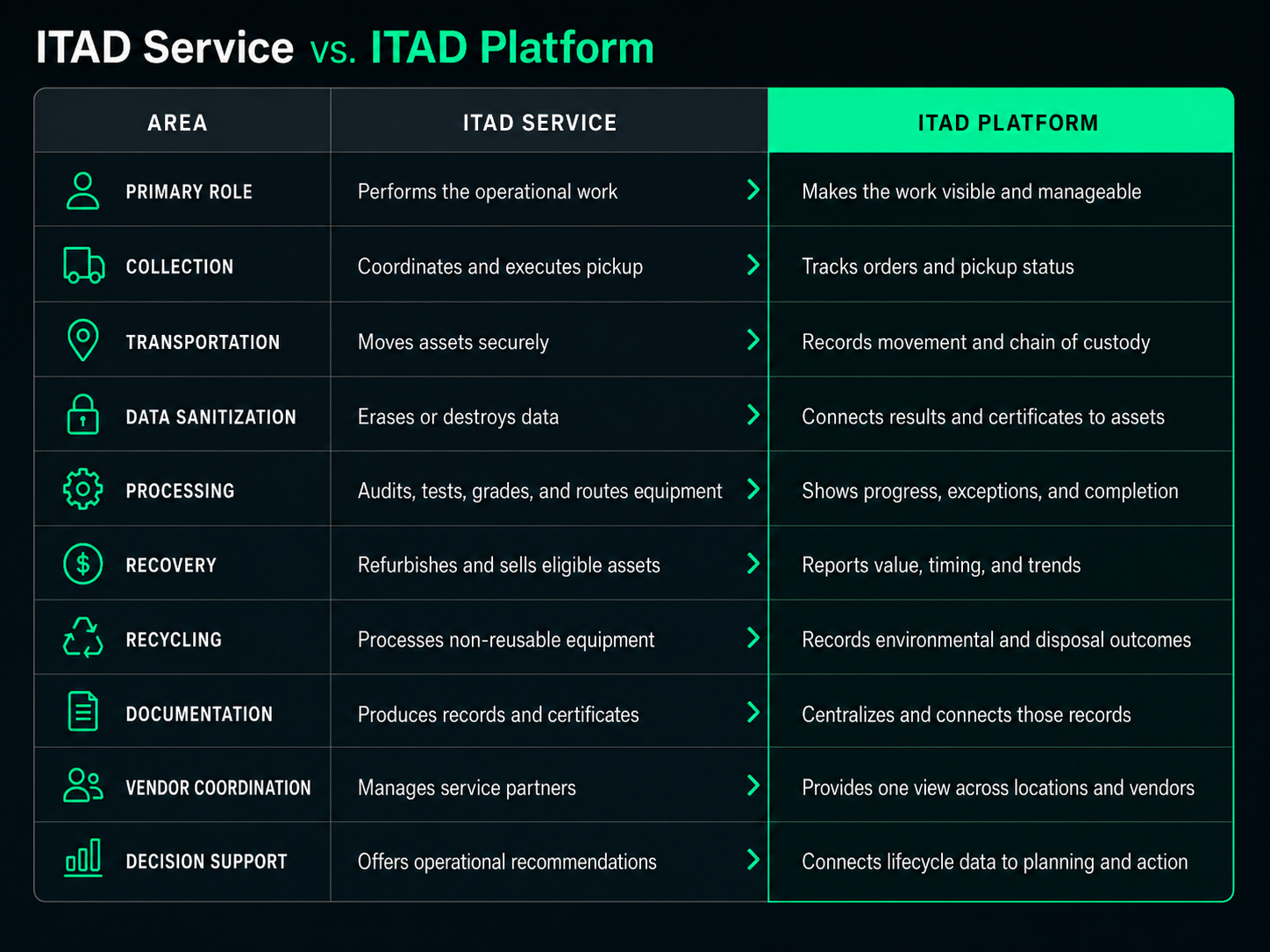
The strongest model combines operational execution with lifecycle intelligence.
The service completes the work. The platform allows the organization to follow that work, access evidence, evaluate outcomes, and identify what needs attention.
Operations teams can track asset movement and workflow status. Security and compliance teams can connect assets to chain-of-custody and sanitization records. Finance and procurement can review recovery performance and timing. Leadership can evaluate whether the program is meeting operational, financial, compliance, and sustainability goals.
The service handles the asset. The platform helps the enterprise manage the outcome.
Steward™ is mender’s IT Asset Lifecycle Command Center, connecting active workflows, asset records, compliance documentation, recovery intelligence, and final disposition outcomes.
It is designed to complement ServiceNow and existing CMDB environments by extending visibility into what happens after equipment leaves active use.
Enterprise ITAD programs need more than a provider that completes a pickup and sends a final report.
They need secure execution, current visibility, connected documentation, financial intelligence, and accountability across the lifecycle.
Mender provides the operational services required to securely process, recover, reuse, and disposition retired technology. Steward™ gives enterprise teams one command center for managing that activity and its outcomes.
Connect with our team to schedule a Steward™ walkthrough and see how a connected platform can support your ITAD program.
No. An ITAD provider performs collection, transportation, data destruction, processing, remarketing, and recycling. An ITAD platform gives the organization visibility and control across those services.
No. A platform cannot physically transport, sanitize, test, resell, or recycle equipment. It supports the management, tracking, documentation, and evaluation of that work.
A reporting portal primarily gives users access to completed documents and results. A platform supports active workflows, asset-level records, exceptions, documentation, and current program status.
A lifecycle command center connects operational workflows with compliance evidence, financial recovery, asset intelligence, and final outcomes. It gives multiple stakeholder groups a shared view across the retirement lifecycle.
Smaller or occasional projects may be manageable through standard reports and direct provider communication. A platform becomes more valuable as asset volume, locations, vendors, stakeholders, documentation requirements, and recovery goals increase.
A well-designed platform should complement ServiceNow and existing CMDBs. It extends visibility into downstream retirement activity, recovery, compliance records, and final disposition.
Spot the sneaky risks and learn to outsmart them.
Get a free asset quote today and let's get mending.